
Low-mass X-ray binary (LMXRB) star system. Strange as it seems, Earth’s future may look something like this, with us inside a black hole-like environment of our creation, on a highly accelerated path to merging with other universal civilizations doing the same. If true, our destiny is density, and dematerialization.
This post is a followup to a popular paper of mine on three big topics: the Fermi paradox, accelerating change, and astrosociology (the nature and goals of advanced civilizations). The paper is called The transcension hypothesis: sufficiently advanced civilizations may invariably leave our universe, and implications for METI and SETI. It was published in Acta Astronautica in 2012.
Speculation on the Fermi paradox has grown considerably in the last two decades, as it has become increasingly obvious that we live in a universe that is very likely to be teeming with Earth-like planets, and also with intelligent, curious, and technologically accelerating forms of life. When we extrapolate our own accelerating progress in science, IT, and nantechnologies, we can imagine that any one of these civilizations could easily send out self-replicating nanotech that would spread across our Milky Way galaxy and beam the information that it finds out to the rest of the universe (or alternatively, just back to the originating civilization), creating a Galactic Internet, and making our universe as information-transparent as our planet is becoming today. Our galaxy has a radius of 100,000 light years. Replicating nanotech, traveling at just 5% of light speed, which we can imagine building even today, could reach all corners of our galaxy in 2 million years. So if other Earth-like planets and their intelligent life likely emerged, closer to the center of our galaxy, at least one billion years before ours did, as several astrobiologists have estimated, and any one of them could have easily expanded, why don’t we see any signs of this Galactic Internet today? Or signs of past alien visitation, probes, and megastructure beacons near Earth? Or signs of intelligent structures or civilizations anywhere in the night sky? In other words, Where is Everybody? That’s the Fermi paradox.
In a nutshell, the transcension hypothesis predicts constrained transcension of intelligence from the universe, rather than expansion (colonization) within the universe by intelligence, wherever it arises. If the hypothesis is correct, the reason we don’t see and haven’t heard from advanced civilizations anywhere is that the vast majority leave the visible universe as they develop, and the few that do not are very unlikely to be visible to us, with our presently weak SETI abilities. That’s a very strong claim. Could it be right?
My paper makes a series of assumptions about the nature and future of intelligent life in our universe. Most of these key assumptions may need to to be correct, in some fashion, for the hypothesis itself to be correct. A few colleagues have asked me to summarize these assumptions in one place, so here they are. This list (updated in 2024 with a twelfth assumption, #3, and some further edits) is a good way to get a quick summary of the hypothesis as well.
Here are the key assumptions of the transcension hypothesis, as I presently see them:
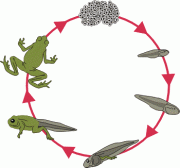
- Universal Evolutionary Development (Evo-Devo Universe). Evolutionary processes in life are unpredictable. They are often described as a random walk, exploring, experimenting, generating diversity. Developmental processes are exactly the opposite. Development increasingly constrains a complex system into certain special and optimal emergent forms and functions, hierarchies, and a replicative life cycle. In the 1990s, the field of evo-devo biology emerged. This field stresses the importance of development as a regulator of evolutionary processes. It explores how these two processes must work together, sometimes in opposition, to create a third, and most important process: adaptiveness. The transcension hypothesis assumes that if our universe is a replicator, these same evo-devo processes must be operating as well. As in life, the future evolutionary states of each civilization in our universe must be unpredictably unique and wonderfully diverse. At the same time, the future developmental states of all cosmic civilizations, including the need to protect themselves against risk and entropy, to increase their complexity, intelligence, consciousness, and adaptiveness, and to eventually replicate themselves and their universal body, which which we’ve known since 1850 must eventually die in heat death, would all be increasingly comprehensible and predictable to future science and simulation. Consider how even the physics and informatics of our universe sort strongly into these two sets of processes. Evolutionary processes are driven by quantum physics and informatics, nonlinearity, chaos, and nonequilibrium thermodynamics, and other divergent and long-range unpredictable processes. Developmental processes are driven by relativity, equilibrium thermodynamics, high-energy physics, and other convergent and long-range predictable processes. Both sets of processes are necessary to understand life and adaptiveness, and we are presently trying to build a bridge between both in a theory of quantum gravity. The fine-tuned universe hypothesis in cosmology, the phenomenon of predictable accelerating change in universe, life, and human history and the phenomenon of convergent evolution on Earth all offer clues to how development appears to work on both universal and planetary scales. A special subset of convergent evolutionary forms and functions will not only have been randomly acquired on Earth (via evolutionary processes), but must also be optimal and universally accessible, at their particular level of environmental complexity, on all Earthlikes in our universe (via developmental processes). In other words, a kind of cosmic convergent evolution must exist, and many future forms, hierarchies, emergences, and constraints must be robustly and predictably built into universal development. In this view, the better we understand and can model developmental processes in living replicators, the more of these future developmental states of civilization (astrosociology) will be accessible to science and simulation. Their future evolutionary states, by contrast, will remain not only far less predictable, but in Stephen Wolfram’s language, they will be computationally irreducible. We can say a lot about the developmental futures of any organism on Earth by simply watching one example of it from seed to life cycle, in any species. By contrast, we can say very little about the evolutionary futures of that organism, as each will take vast numbers of unpredictable paths (molecular dynamics, gene assortment, tissue microarchitecture, learning, decisions, behaviors) that are highly contingent on its specific environment. Yet both of these opposing dynamics, must be held in our heads, simultaneously and paradoxically, if we are to understand complex adaptiveness. Both of these opposing processes are fundamentally important, if we live in an evo-devo universe.
- Accelerating Development (STEM Compression) of Complexity. Predictable accelerations of complexification are common in biological development. Think of how a single fertilized egg creates a 80 trillion-synapse human brain, at molecular, cellular, tissue, and organismic scales. Now consider how accelerating complexity has emerged in both life and human history. Via processes of biological punctuated equilibrium, and societal punctuated equilibrium, the leading edge, most generally adaptive forms of life, human and technological complexity have historically migrated their brains and bodies into increasingly dense, productive, miniaturized, accelerated, and efficient scales of Space, Time, Energy, and Matter (what I call STEM compression) of computation and complexity, because this is the best strategy to become the niche-dominant local intelligence, and because the special physics of our universe allows this continual migration into “infospace” and “nanospace“. The leading edge of complexity always develops to inhabit increasingly local zones of space and time. We can call this universal trend “localization”. Leading (most complex) systems began with the whole universe, then became large scale structure, then galaxies, then suns, then Earthlike planets, then prokaryotic life, then eukaryotes, then tetrapods, then hominids, and soon, will become postbiological life, in an accelerating developmental progression. Human brains with their thoughts, emotions, morality, and self- and social-consciousness, are the most STEM-compressed higher computational systems on Earth at present. But our biological brains are just now starting to get beat at the production of intelligence by deep learning computers, which are several orders of magnitude more STEM-compressed in certain kinds of computation than neurons (for example, electrical interneuron communication in an artificial neural network is roughly seven million times faster than chemical action potentials between biological neurons). Once today’s weakly bio-inspired machine intelligence becomes fully self-improving (autopoetic), it seem likely to continue growing and improving at rates that make biological intelligence appear rooted in spacetime by comparison, in the same way that Earth’s plant life appears rooted in spacetime by comparison to self-aware animal life. Fortunately, accelerating STEM-compression of both human civilization and of our leading computational technologies is stepwise measurable and testable, as argued in my paper. Our academics need better funding and training to do so, however. Acceleration studies does not yet exist as an academic discipline, despite my calling for its existence since founding a nonprofit with that name in 2003. Measuring the STEM-efficiency growth of new computational platforms, like quantum computing, is today far more art than science.
- Adaptive Implications of STEM Compression. As a result of this developmental trend, every complex system in “outer space” is physically and informationally simpler, slower, more easily modeled, less conscious, less cooperative and competitive, less powerful, less immune, and less value-creating than systems that have successfully self-organized to go further inward. Said more simply, STEM compression strategies almost always outcompete in adaptiveness, and outer space is boring, slow, simple, weak, risky, and poor by comparison to our ever-accelerating inner space frontier. As a survival strategy, expansion very quickly becomes maladaptive, vs further localization and miniaturization of every leading complex system’s vital physical and informational processes. Humanity realized this during the Apollo era, when we characterized our moon and other planets as places of “magnificent desolation.” We wisely refocused our attention to our own civilization and its relentless drive further into inner space. Even though AI is still a few decades away from having human level neural circuit complexity, since the mid-2000s our increasingly AI-enabled technology firms have created an intangibles-led economy that will continue to outcompete tangible products and services in creating economic value. This accelerating economic dematerialization will increasingly allow intangibles leaders (AI-, IT- and data-first platform companies) to disrupt, outcompete, or purchase ever more tangibles-based companies, and they will increasingly dominate our equity markets. At the same time, the intangibles economy progressively reduces its need for physical resources (space, time, energy, and matter) per computation and per monetary value, making it a prime strategy for sustainability policies. We will never get degrowth, only increasingly virtual growth, and increasing regulation of tangibles activities toward a more circular economy. AIs may still be a decade away (in 2025) from trading with each other using human-equivalent world models, competing economically and politically to find solutions to future problems, as Arthur C. Clarke and others have envisioned. But they are well on the path, as seen in the emergence of the model context protocol for frontier AI models in late 2024, and machine-to-machine communication and computation are truly new forms of value creation. They are capable of improving at the rate of simulation-centered machine learning, which is roughly 7 millionfold faster than human mental learning. As I have written with Nakul Gupta on the Substack series Natural Alignment (2022) humanizing this accelerating transition, by deep neuro and biomimicry, increasingly turning “them” into “us”, has become the most important engineering project for humanity. Most alignment scholars still ignore the natural alignment hypothesis. Yet it seems the only alignment solution available to us, if the fastest, safest, and wisest way for AI to continue to scale is to increasingly copy and then build on all the critical algorithms and network properties of natural intelligence.
- The Black Hole Limit to Accelerating Complexity. The accelerating STEM compression of complexity must eventually stop, at structures analogous to black holes, which in current theories appear to be the most computationally accelerated and computationally efficient entities in the known universe, an insight the distinguished physicist Seth Lloyd made in 2000 which remains widely underappreciated by most information, computation, and complexity theorists today. Fortunately, this idea of a developmental “black hole destiny” for civilization seems quite testable observationally via search for extraterrestrial intelligence (SETI), as argued in my paper
- Robustness of Compressed Complexity. Just as a seed can survive for millennia, and bacterial spores and tardigrades can survive in space, a future highly STEM-compressed life form will presumably not only not need stars, as it will be presumably capable of generating its own fusion energy, but it may be able to enter and live inside of black holes, the most mysterious and dense objects in our universe, as physicists like VyacheslavI. Dokuchev (Is there life inside black holes?, 2011) philosophers like Clement Vidal (Black Holes: Attractors for Intelligence?, 2011), and perhaps earliest in print, lowly systems theorists like myself (2002, 2008, 2011) have proposed. A civilization whose intelligence structures are compressed to scales far below the nanoscale may well be capable of creating or entering black-hole-like environments without their informational nature being destroyed. Consider that there are 25 orders of magnitude in size between atoms and the Planck scale. This is almost as large a size range as the 30 orders of magnitude presently inhabited by life on Earth. We simply don’t know yet whether physics will allow intelligence to exist at those small scales. My bet is that it can, and that STEM compression drives leading universal intelligence to black hole domains, as the fastest way to generate further adaptive intelligence, with the least need for local resources.
- Contact Benefits of Black Hole Environments. Black holes may allow instantaneous contact with other transcended civilizations, either via some kind of wormhole network (Einstein-Rosen bridge), or via access to an environment outside of our universe (multiverse, hyperverse). As STEM compression physics and information theory improve, we may learn that inward migration provably minimizes the time to contact with other transcended civilizations, maximizing the universal production of complexity with STEM resources. Yet there is also another way that black hole-dwelling civilizations might meet that does not require unknown physics. Due to general relativity, extreme gravitational time dilation occurs very near the surface (event horizon) of black holes. Thus black holes would act as forward time travel devices, for any highly STEM compressed civilization that can arbitrarily closely approach their surface without destroying itself. Black-hole-like conditions are thus gateways to instantaneous contact with other unique civilizations in our universe within any gravity well. Our gravity well includes the Milky Way and Andromeda galaxies, each of which is destined to merge all its black holes, and each of which may contain millions of intelligent civilizations. The rest of our universe is accelerating away from us, due to dark energy. Perhaps the vast majority of black holes in these galaxies (billions?) are unintelligent collapsed stars. But if the transcension hypothesis holds, some smaller number (millions?) may also be a developmental product of intelligent civilizations.
- Merger Benefits of Black Hole Intelligences (Non-Godlike Nature of Intelligence). If we live in not only a developmental universe, but an evolutionary one, each local universal civilization can never be God-like, but must instead be computationally incomplete, an evolutionary “experiment” with its own own unique discoveries and views on the meaning and purpose of life. Thus each civilization, no matter how advanced, would have useful differences in their science, technology, politics, and culture, and be able to learn useful things from every other civilization. In such a universe, we would greatly value contact, comparison of our simulations, critiques, and merger into a greater collective intelligence, assuming that we could trust the other advanced civilizations that we might communicate with. Computational incompleteness would also make us increasing value simulation over physical experimentation, the more complex intelligence becomes. The better faster, better, and more resource (STEM) efficient models of our physical world get, the more we choose virtual rather than physical experiments to address persistent incompleteness in our simulations.
- Seed-Like Nature of Black Hole Intelligence. As local acceleration of STEM compression stops, the more black-hole-like we become, local learning will saturate. Local intelligence will be running as fast as it can in this universe, yet it will be both resource and speed constrained. It’s local conditions, in other words, will be increasingly boring and predictable. It will be, from its own reference frame, at “The End of Science”, the end of what it can easily learn and know, to use the title of the elegant and profound book The End of Science (1996/2015) by science writer John Horgan. In those interesting conditions, it may irresistable to slow down local time via black hole entry, and thus simultaneously accelerate nonlocal time, making meeting and merger with other civilizations near-instantaneous. In “normal” universal time, galactic black holes are predicted to merge some tens to hundreds of billions of years from now, as our universe dies. But from each black hole’s reference frame, this merger is near-instantaneous We can think of black holes as shortcuts through spacetime, just like quantum computers are shortcuts through spacetime. Indeed, quantum physics and black holes (relativity) must eventually be both evo (chaotically) and devo (causally) connected, both physically and informationally, in any future theory of quantum gravity. If some type of hyperspace, extradimensionality, or wormhole-like physics is possible, there might also be ways of future humanity instantaneously meeting civilizations beyond our two local galaxies. But such exotic physics is not necessary for our local gravity well, and for all other civilizations in their own galactic gravity wells. Standard relativity predicts that if we can survive in black-hole-like densities, and if our galaxies are life and intelligence-fecund, we will meet and merge with potentially millions of civilizations as soon as we approach the surface of any black hole, from our reference frame. In other words, our universe appears to have both “transcension physics” and massive parallelism of intelligence experiments built into its relativistic topology and large scale structure.
- Immunity and Morality Constraints in Complex Civilizations. If not only intelligence, but also immunity (stability, antifragility) and morality grow in leading intelligences in our universe, in rough proportion to their complexity, in other words, if these three life-critical systems are each not only evolutionary, but also developmental, and thus their emergent form and function is at least partly encoded in the “genes” (initial conditions, laws, and environmental constraints) of the system itself, then we can predict that more advanced intelligences, including our coming deep learning computers, will be not only more intelligent, but also more immune and moral than we are today. This idea is called developmental immunity and developmental morality, and I explore it in my paper, Evo-Devo Universe? (2008). If these developmental processes exist, they tell us something about the nature of postbiological life. Such life is going to be a whole lot more collaboration-oriented, intelligence-oriented, immune, and moral than we are today. Social morality, for its part, pushes complex intelligences toward a more ethical impact on the world and each of its sentiences. Decreasing violence has been a mild trend in human societies in recent centuries, as documented in Pinker’s The Better Angels of Our Nature, 2011. But I expect it to be a much stronger trend in postbiological intelligences. Physicists Stephen Dick and Seth Shostak have stressed the importance of thinking hard about the norms and morality of postbiological culture. It’s a big assumption that surviving human and machine collectives must on average become increasingly intelligent, immune, and moral in proportion to their cognitive complexity, under natural processes of evolutionary selection and development, but this is where all the evidence seems to be leading, in my view.
- Information Theory Prime Directive Against Colonizing and METI. In a universe with transcension physics, with all civilizations separated by large spatial distances, a moral Prime Directive must emerge, based on principles of information theory, computation theory, and complexity theory. Many lines of evidence in complex adaptive and evo-devo systems theory, theory of computation and learning, Shannon’s information theory with and without feedback, Bayesian learning with feedback, cybernetics and control theory, and control vs learning in neural networks tells us that two-way information flow, with feedback, is always necessary for learning and creation, while one-way information flow is primarily useful for control. Said another way, two-way information flow, over short send-receive timescales, is necessary for evolution and learning under selection. One-way information flow is primarily useful for development, and if it is overused, it greatly reduces evolutionary diversity. There is always a critical balance between evolution and development in information, computation, and complexity production in adaptive systems. Too much top-down or bottom-up information flow has a great cost to adaptiveness. I expect future science will be able to prove that one-way messaging (constructing powerful METI beacons), building self-replicating robotic probes able to interact with less advanced civilizations, and any other kind of galactic colonization would cause a great reduction in evolutionary diversity across the network of transcending civilizations, and so will be ethically prohibited by postbiological life. Consider that wherever such one-way messaging or colonization occurred, we’d meet informational clones of ourselves in the post-transcension environment. That is a most undesirable outcome, if one of our highest evo-devo purposes is to maximize cosmic intelligence prior to universe replication, and if we know that none of those intelligences will ever be God-like (omniscient or omnipotent) relative to the universe. Remember that each civilization will have unique and hard-won local diversity in its science, technology, economies, politics, societies, and religious beliefs. In biology, evolution keeps clonality a very rare outcome, due to great diversity and adaptiveness cost it levies on the progeny. If our science proves this information theory in coming decades, and if we have both theoretical and empirical evidence that black holes are our gateway to meeting and merging with other civilizations (empirical evidence being the witnessing of Earthlike planets regularly “winking out” and turning into black-hole-like objects across the galaxy), then any future civilization that wanted to ignore this knowledge and continue to colonize the stars, or construct METI beacons, would surely be prevented from doing so by postbiological intelligences. Such actions would be seen by them as similar to mass killing, destroying our history, or any other mass complexity destruction activity on Earth today. We may even come to understand that our universe has self-organized both a faster than light barrier, and vast cosmic distances between everything interesting, in order to make sure that galactic colonization (monoclonality) is statistically a very rare outcome. Again, this hypothesis seems likely to be testable via future information theory, cosmology, and SETI, as I argue in my paper.
- Fine Tuning and Cosmological Natural Selection. Some physicists, most notably Lee Smolin in his hypothesis of cosmological natural selection, have proposed that several of our universe’s fundamental parameters (roughly six of twenty six) appear to be fine tuned for the creation of long lived universes hospitable to complexity, and a fecund (not maximal) production of black holes. Smolin has also proposed that black holes may be “seeds” or “replicators” for new universe creation. This hypothesis gives us a clue to what we might do after we meet up with other cosmic intelligences. We would likely compare and contrast what we’ve learned, and then seek to make a better and more adaptive universe (or universes) in the next replication. Current physics and computation theory suggest that our universe, though vast, is both finite and computationally incomplete. It may have gained its current amazing levels of internal complexity in the same way life on Earth got its amazing living complexity, in a process of self-organization, via evolutionary and developmental (“evo-devo“) processes, through many past replications, in a larger selection environment, some kind of “multiverse” or “hyperverse.”
- Inner Space Future of Humanity. If all of this is roughly correct, our future isn’t outer space, it’s “inner space.” Both the inner space of black-hole like domains, and the inner space of increasingly virtual and computational domains. The lure of our continually improving inner space is why 21st century folks spend so much time (too much time!) interacting with our still-primitive mobile devices today. It is why the growth of virtual and augmented reality heralds far more than just better entertainment experiences. Combined with the growth of machine learning, virtual/augmented reality will increasingly become the thinking, imagination, and simulation space for eventual postbiological life. Virtual space is where intelligent machines will figure out what they want to do in physical space, just as our own simulating brains are biology’s virtual reality. And just like humans have have done as our civilization has developed, future machines will do more and more internalization, or thinking in virtual space, and less and less external acting, in physical space, the more intelligent they get. This internalization process has a name. It’s called dematerialization (both economic dematerialization and product and process dematerialization), the substitution of information and computation for physical products, processes, and behaviors. The futurist Buckminster Fuller called this process ephemeralization. But ephemeralization of intelligence is only half the story. It describes dematerialization, not densification. If the transcension hypothesis is true, the developmental destiny of all complex life is both accelerating “densification” (eventually to a black hole-like state) and “dematerialization” (becoming increasingly informational and virtual, over time). See my online book, The Foresight Guide, for more on these planetary megatrends, densification and dematerialization (“D&D”) and how they appear to drive universal accelerating change.
As Fermi paradox scholar Stephen Webb says at his blog, this is quite a lot of “ifs!” Disproving any of these assumptions would be a good way to start knocking aspects of the transcension hypothesis out of contention. We would learn a lot about ourselves and the universe in the process, so I really hope that each of these gets challenged in coming years, as the hypothesis gets further exposure and critique.
Webb is the author of Where is Everybody?, 2015, a book that offers seventy-five possible solutions to the Fermi Paradox. Webb did a great job condensing the transcension hypothesis into just three pages in his book. His 2002 edition didn’t include it, as I published my first paper on the hypothesis in mid-2002. At Webb’s blog, he charitably says the transcension hypothesis is “one of the most intriguing” possible solutions that he has seen. He also observes that “Unlike so many “solutions” to the Fermi paradox, this one offers avenues for further research.” It certainly does, which is why I hope it continues to gain scrutiny and critique.
A few scholars are now citing the transcension hypothesis in their academic papers on the Fermi paradox and accelerating change, including Sandberg 2010, Flores Martinez 2014, and Conway Morris 2016. I am hoping that trend continues. The more attention it gets, the more critique it will get.
Perhaps the strangest and hardest-to-believe part of the transcension hypothesis, for many, is the idea of universal development. It is central to at least half of the assumptions in the list above. By far the most amazing and odds-defying thing I’ve come across in my own study of the natural world is the process of biological development. Most people don’t think about both how wonderful and how improbable, is the process of organismic development, as a model for how complexification naturally occurs, given the perennial chaos and contingency of the environment.
Think about it. Development is guided by a small handful of genes in our genome. It’s incredible that it works, yet it does, and it made you! Development is a good candidate for the most incredible process in the known universe. In many ways, development is even more surprising than evolution, which I define as the set of biological genes and mechanisms that create unpredictable experiment and variety, as opposed to that small subset of chaos-reducing biological genes and mechanisms that statistically guarantee a hierarchical set of future-specific forms and functions. Standard evolutionary theory requires development as an organismic process, yet it also treats development as subservient to the variety-generating processes in natural selection. That second assumption is incorrect, in my view, and it has led us down the wrong path in long-range thinking on the future of complex adaptive systems. We view our complex future as far less developmentally constrained than it actually is.
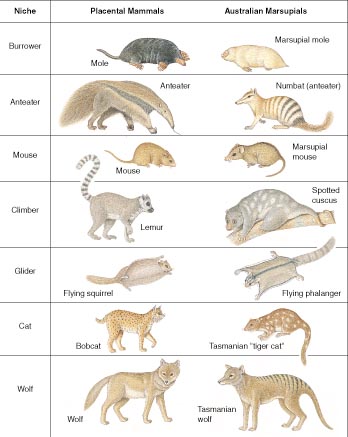
Fortunately, a growing contingent of evo-devo biologists argue that development’s long-range role in constraining the possibilities of evolutionary change may be equally important to evolution’s long-range impact on development. Both processes seem fundamental to mature theory of adaptation. Ecologists have published good work on the way ecosystem development limits the future of evolutionary processes. For example, think of ecological succession, in which increasing senescence of the ecosystem limits short-term evolutionary variety, while also making the oldest parts of the system increasingly vulnerable to death (and renewal). Think also of niche construction, which tells us how growing intelligence, which we use to fashion comfortable niches, limits the future selection placed upon us by our environment. Scholars of convergent evolution also describe apparently universal processes of morphological and functional development that will constrain evolutionary possibilities on all Earth-like planets. Cosmologists who take fine-tuned universe arguments seriously also talk about both local variety and processes of universal development, though they don’t often use that clarifying phrase, when they describe physical and chemical constraints on the possibilities of evolutionary change. All these are important clues toward a meta-Darwinian, evo-devo universe paradigm of universal change.
In short, if our universe actually replicates, as seems plausible in several cosmology theories, and if it exists in some kind of larger selection environment, as also seems plausible, then not only evolution, but development (“convergent evolution”) must also occur not just in species forms and ecosystems, but for our increasingly intelligent planet, as a developing life-human-machine “Global Superorganism”, and for our entire universe itself, as a replicator in the multiverse. Certain aspects of the future of complex systems must be statistically highly biased to converge on particular destinations, and today’s evolution-centric science still has a lot of growing up still to do in order to see these destinations. It needs to become “evo-devo”, seeing the contributions of both evolution and development to the future of universal complexity.
The paper’s second key assumption, STEM compression is more palatable to most people, in my experience, and may turn out to be the most enduring contribution of the paper, even if the rest of the hypothesis is eventually invalidated. If you’ve heard of nanotechnology, you know that life’s leading edge today, humanity, is doing everything it can to move our complexity and computation down the smallest scales we can. We have been very successful at this shrinking over the last several hundred years, and our ability to miniaturize and control processes at both atomic and subatomic scales is growing exponentially. In fact, human brains themselves are already vastly denser, more efficient, and more miniaturized computational devices than any living thing that has gone before them. But they are positively gargantuan compared to the intelligent computing devices that are coming next.
Fortunately I think each of the key assumptions outlined above are testable, though some are obviously more testable than others in today’s early stages of astrophysical theory, SETI ability, information, complexity, and evo-devo theory, and simulation capacity. If anyone is doing work that might shed light on any of these assumptions, I would love to hear of it.
You can find my paper here: The Transcension Hypothesis, 2012. See also this fun 2 minute YouTube video of the hypothesis, by the inspiring futurist Jason Silva and Kathleen Lakey, which has raised its visibility in recent years.
You can find an overview of the evo-devo (evolutionary and developmental) universe hypothesis in my chapter-length article, Evo-Devo Universe? A Framework for Speculations on Cosmic Culture, 2008.
Comments? Critiques? Feedback is always appreciated, thanks.












 Ever Smarter World